
A printed document, varying in size and format. Contains the names and descriptions of every member of a ship’s company. Across the top was printed “A List of the Company,”, “List of Persons,” or perhaps “Role d’Equipage,” the French term. The master’s name, ship’s name, destination, and tonnage was often found on the upper portion of the document, where some examples displayed engraved eagles, etc. The body of the Crew List consisted of columns containing names, ages, places of birth and residence, and other descriptive information, such as complexion and crew status. The kinds of information requested varied from one document to another. Some examples also include a column for witnesses signatures. Depending upon the immediate use of the document, it could contain the signatures of the shipmaster, the customs collector, and consular official, or a combination thereof. Some examples were certified not only with authorized signatures, but by various stamps and seals as well.
The Act of 28 February 1803 contained the first legal mention and requirements for keeping a Crew List as part of the ship’s papers. Before a vessel could depart on a foreign voyage, the master had to deliver a list of the crew, verified by his oath, to the customs collector at that port. The collector then supplied the master with a certified copy of the list, copied in a uniform hand, along with a Clearance Certificate, at which time the master entered into a four-hundred-dollar bond to exhibit the Crew List to the first boarding officer he encountered upon his return to a U.S. port. There he was required to produce the persons named and described in the Crew List to give account for any crew members who were not present. Notes certifying sickness, discharge or desertion, usually signed by a consular official, were often included with the original list in order to prove that individuals not present were legally accounted for. Crew Lists of various kinds are commonly found in maritime collections. In addition to the formal document described here, a list of crew members usually appears on the Articles of Agreement, and such lists are often written in ship’s logbooks or journals.
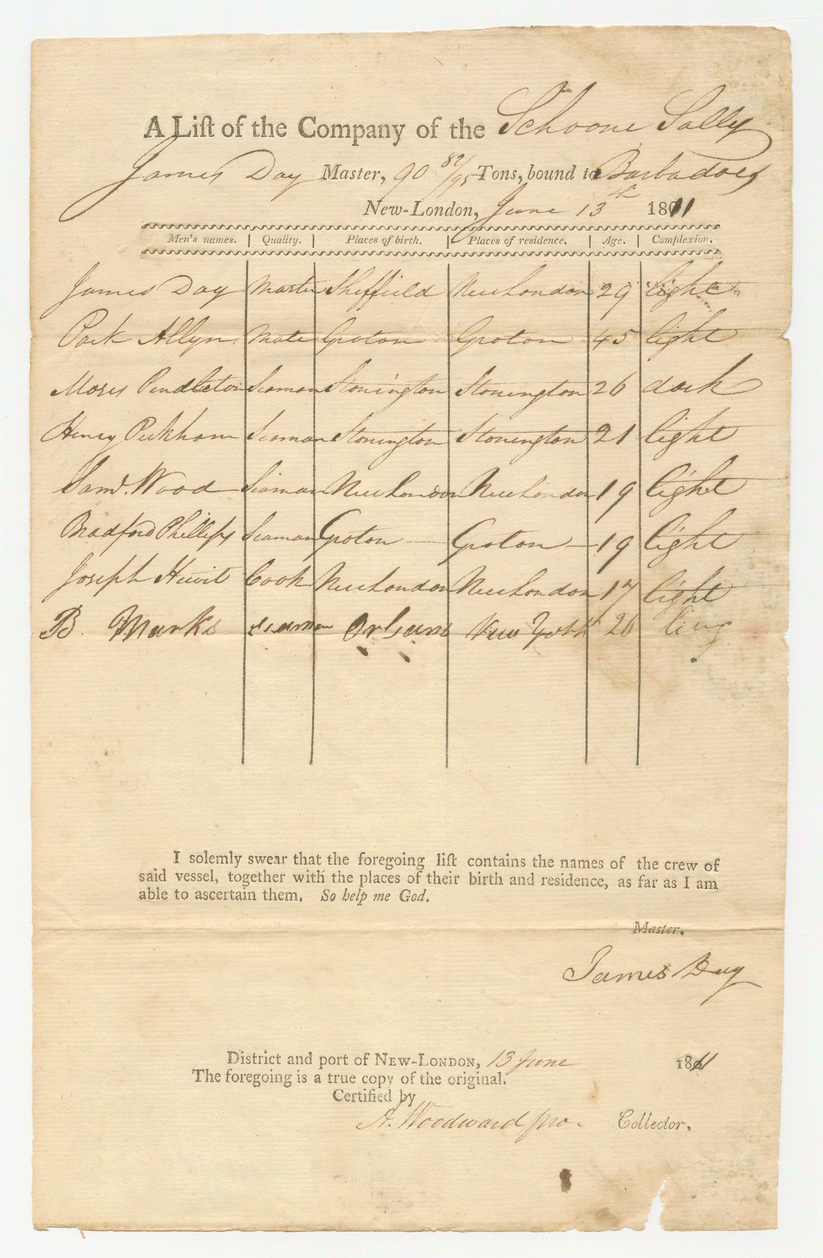
Official Crew List typical of those used during the early nineteenth century. Note the uniform hand of crew member’s data, the master’s oath, and collector’s certification.
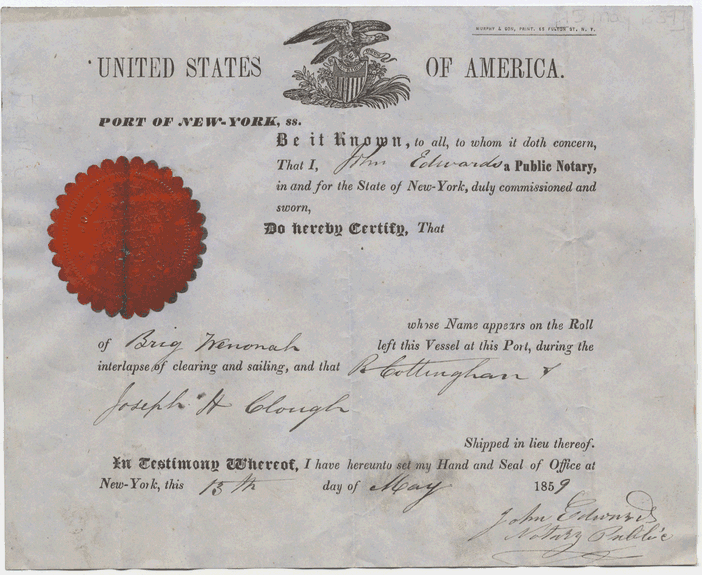
Crew List Certificate of Change: If a ship had already obtained a clearance from the customs collector or consular official at a port, and a change in the composition of the crew was made, some official documentation of the change was required. A Certificate of Change could be obtained quickly from a notary public, thus authenticating the alteration and avoiding problems at the next port. The document included the names of crew members who left or boarded the vessel before sailing, the vessel’s name, and the notary’s signature and official seal.
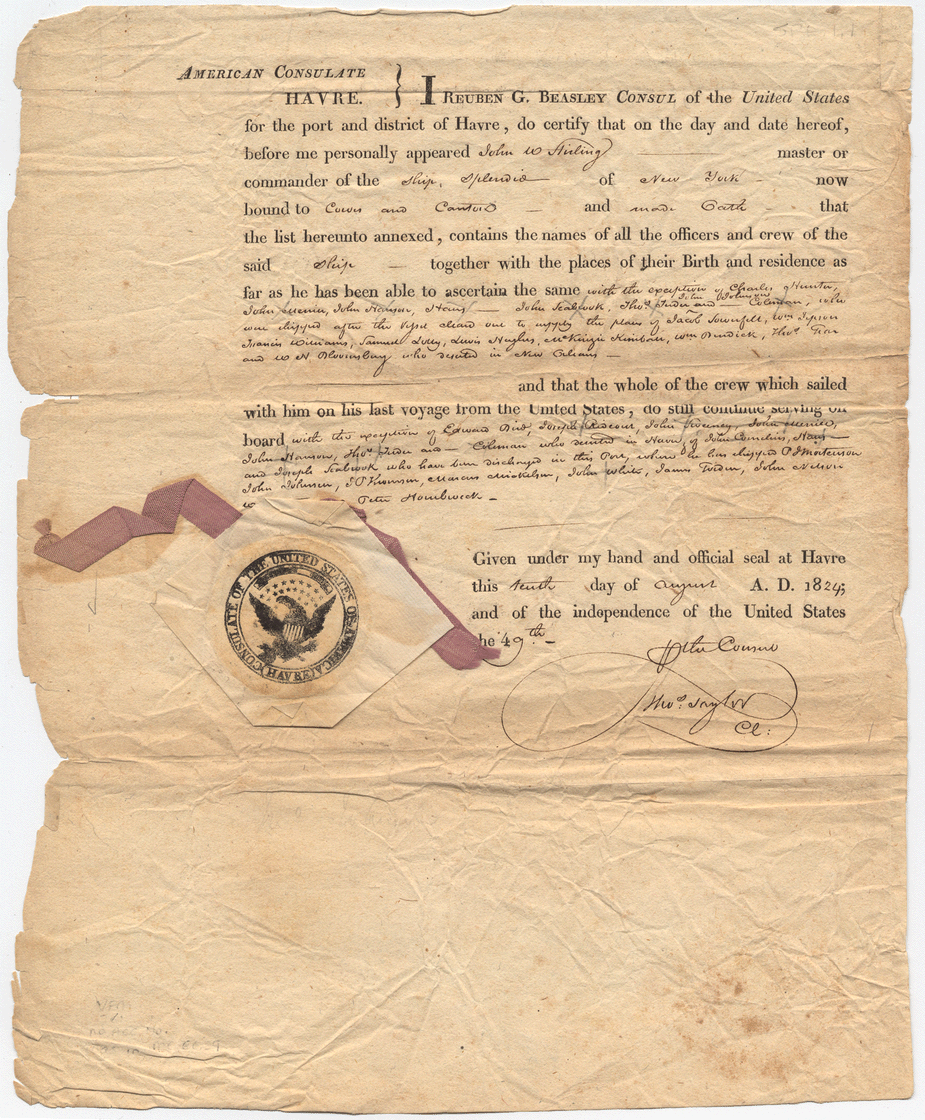
Crew List Certification: Any time a vessel entered port, either in the U.S. or in a foreign country where there was a consulate, the master was required to exhibit the Crew List to a customs or consular official. The officer would then fill out a Crew List Certification, stating that the boarding officer had compared the list and other relevant ship’s papers to the actual crew members. These documents varied in format, but necessarily included the vessel’s name and home port, the master’s name, and the names of any seamen who appeared on the crew list, but who had deserted or been discharged. When properly executed, the certificate carried the Collector’s or Consul’s signature, and official stamps and seals.
Crew List Bond: A bond in the amount of $400.00 signed by the shipmaster and others, within which he agrees to comply with all legal obligation regarding the Crew List during the upcoming voyage. (Courtesy of Rhode Island Historical Society.)
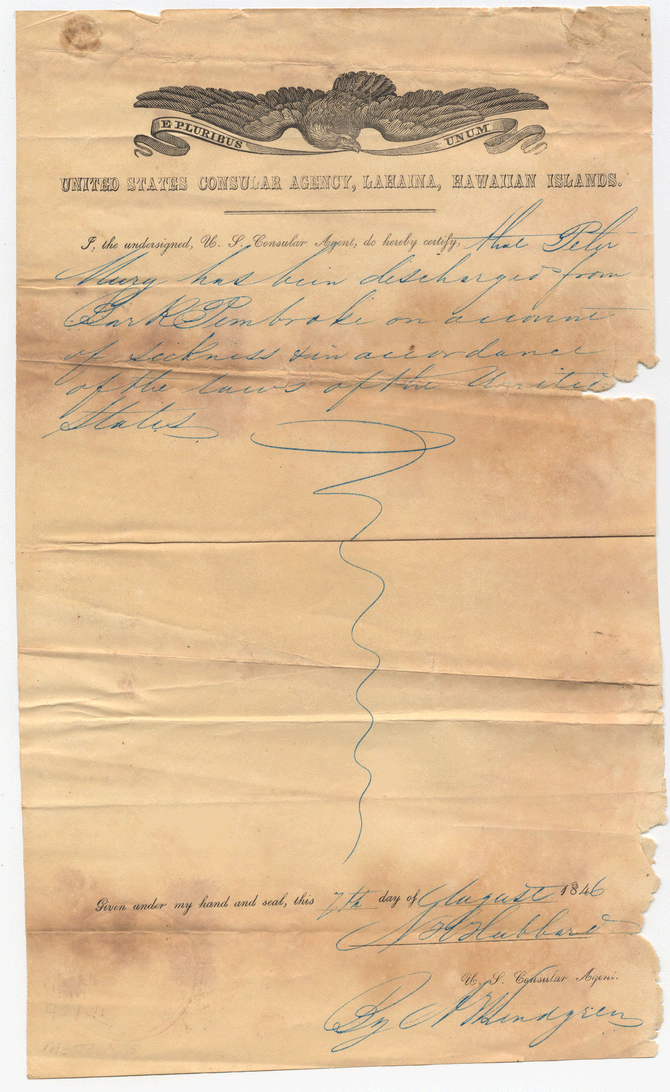
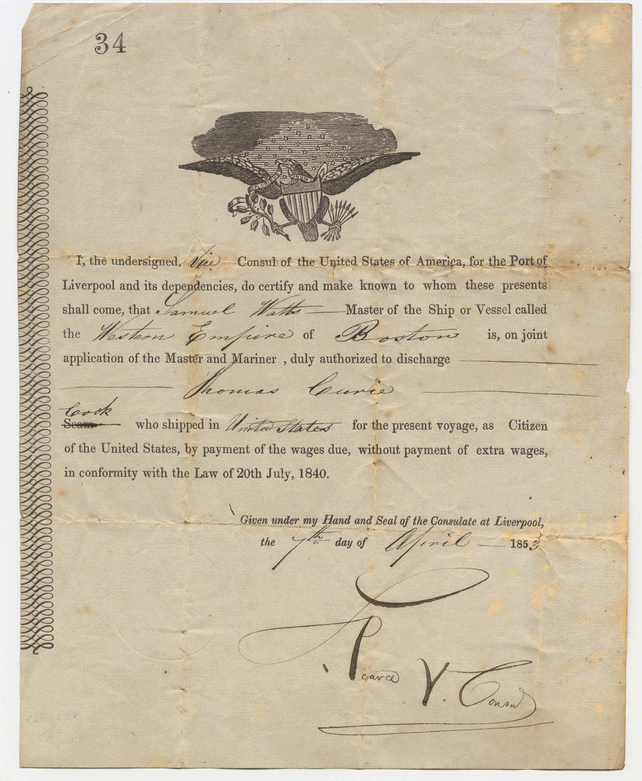
Discharge Certificates were used to record the discharge of crew members from American vessels at foreign ports. These documents varied in size nd format. However, they usually included the names or names of seamen being discharged, the vessel’s name and home port, the master’s name, and the reason for discharge. The U.S. Consul or other qualified official signed and sealed the document. It was given to the shipmaster who placed it with the Crew List as proof of the alteration in the composition of the crew. Individual discharge receipts were also given to each person discharged.
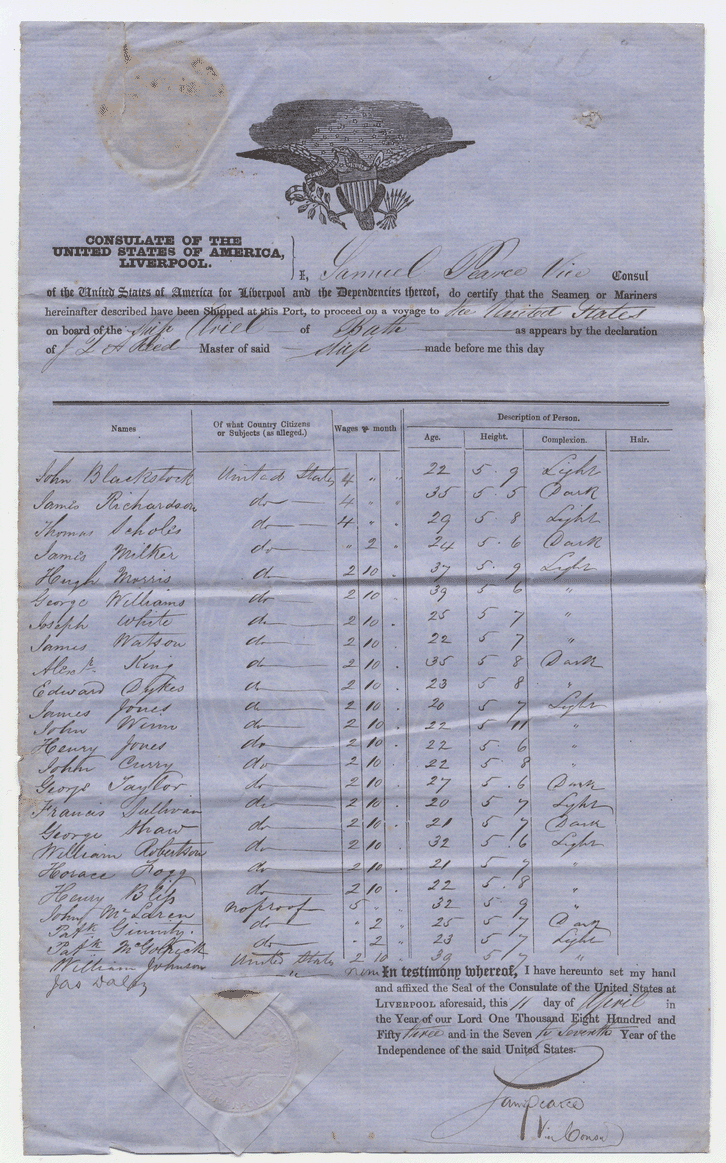
Consul’s Certificate of Crewmen Shipped: This document contains the names of individuals shipped as crew members aboard the ship Ariel by the U.S. Consul at Liverpool. Like the customs service Crew List previously described, the Consul’s Certificate also exhibits the uniform hand and other similar information. This copy was given to the shipmaster, who would then produce it, along with the original crew list and other related documents, upon his arrival at the first port of call in the United States.
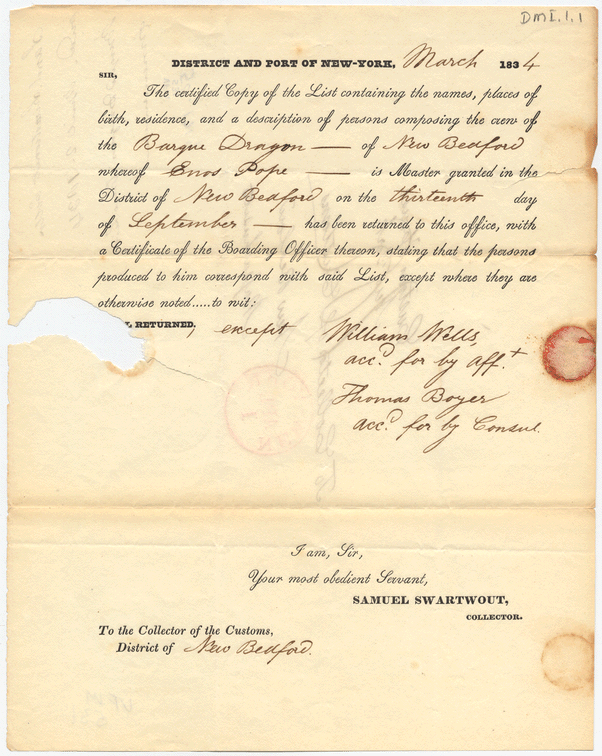
Customs Certificate of Crew List Examinations: The Act of 1803 required the master of any ship returning from a foreign voyage to produce all relevant Crew List documents to the boarding officer of the first U.S. port he returned to. The document above, from the Collector at New York to the Collector at New Bedford, reveals that the bark Dragon had first arrived in New York and that the certified copy of the Crew List had been inspected with alterations noted.
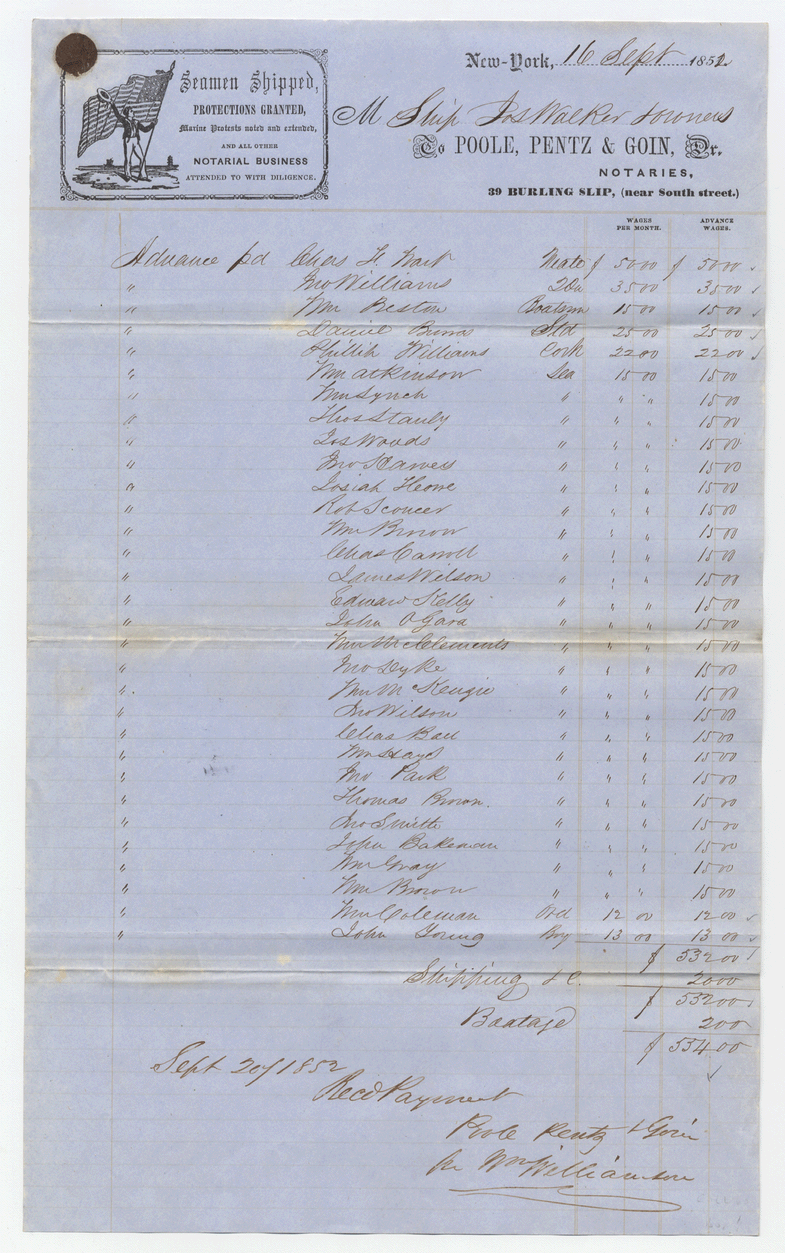
Various kinds of “Crew Lists” can be found in maritime collections. Shown here is a bill from an agent to the shipowners for signing up 31 men. A total of $532.00 was advanced to them, and the agent charged $20.00 plus $2.00 for boating them to the ship.
