
Oaths of various kinds often appear in maritime collections, and are especially common in papers that were created during the early years of the nineteenth century. The concept or practice of oaths is not unique to maritime matters, but they were frequently required by customs, consular, or other authorities to help establish compliance with the numerous regulations and procedures that governed America’s maritime trade. The language used on these forms remained fairly consistent throughout this period. They exist as separate documents, and are also printed on Manifests, Crew Lists, or other papers for which a particular oath was required. A sample of the variety of Oath forms are represented here.
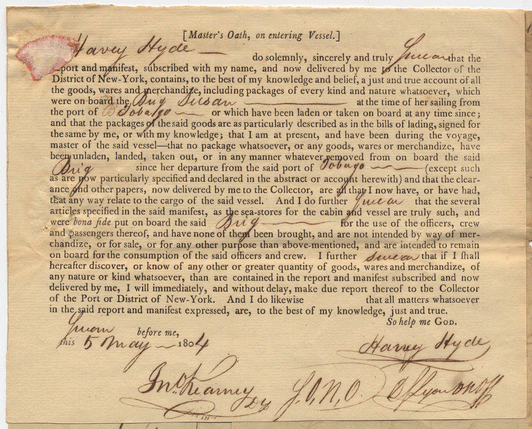
Master’s Oath on entering Vessel: Customs form, signed by the shipmaster, wherein he swears that the manifest and other papers relative to his vessel’s cargo is accurate in every respect, New York, 5 May 1804. This document was executed after a vessel entered port and the master was filing his cargo manifest with the customs authorities. Signatures of the deputy collector and naval officer also appear.
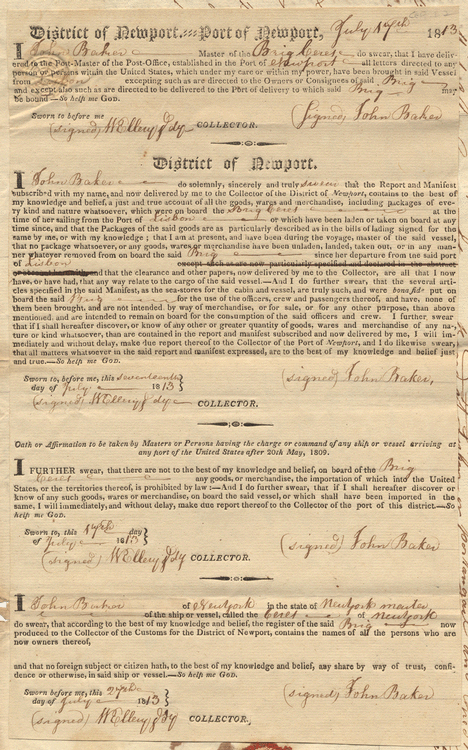
Customs Oaths of Compliance, July 1813, typical of those required by the local districts during the early nineteenth century. In this example, the shipmaster, upon arrival, signs sworn statements that he has delivered all appropriate mail to the post office, that his cargo manifest is accurate, and that to his knowledge there are no illegal goods aboard the brig. Ten days later, before departing, he swears to the accuracy of the ship’s register, and confirms that the vessels is completely owned by American citizens. This particular document was evidently a copy of the various originals, and was given to the shipmaster for his records.
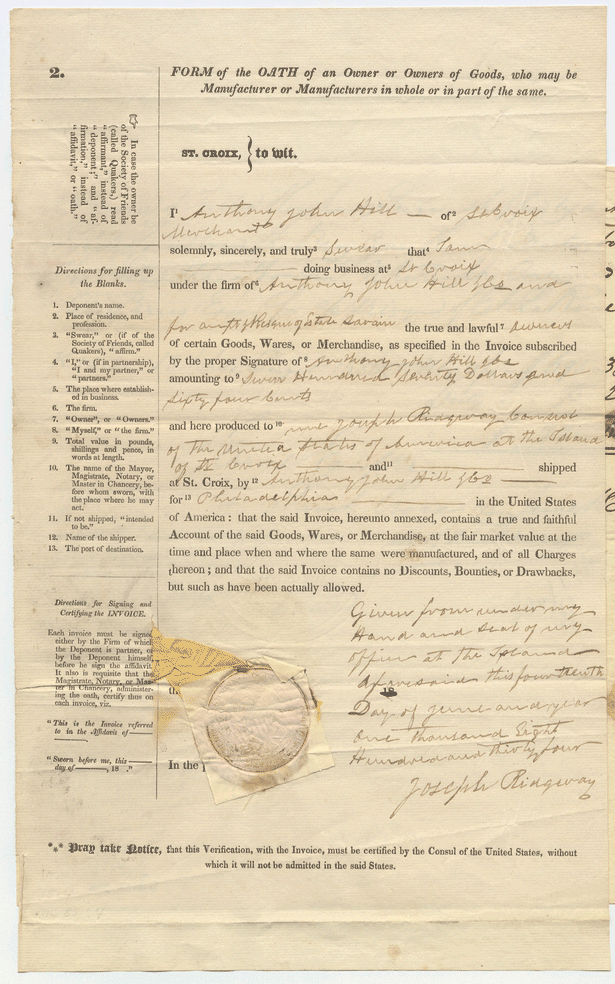
Oath of an Owner of Owners of Goods who may be manufacturers in whole or in part of the same. This consular form indicates that the goods, valued at $770.64, are owned by the deponent, and are being shipped by him to the United States. Documents contains the signature of the U.S. Consul, and the consular seal, St. Croix, 14 June 1834. These forms were often attached to the appropriate invoice or vessel’s cargo manifest.
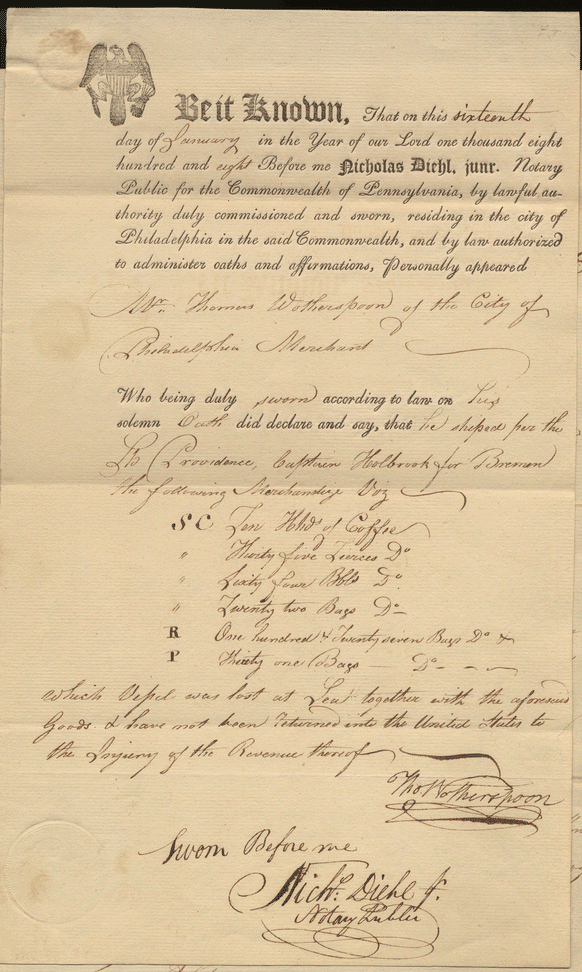
Oath regarding loss of cargo: This notary document indicated that a Philadelphia merchant swears to the loss of his shipment of coffee when the vessel carrying his cargo to Bremen was lost at sea, Philadelphia 16 January 1808. This form would have been part of the process necessary for the shipper to file a claim against those who insured his cargo. Contains notary stamp, and the signatures of the deponent and the Notary Public.
